
In This Article
The fastest way to avoid roaming charges in Israel is to make your phone plan decision before your flight, not after you land. Too many travelers assume they can use their regular carrier for a few days and sort it out later. That is exactly how surprise fees show up - background app usage, map downloads, photo backups, and a few routine calls can turn into an expensive bill.
If you want predictable costs, immediate service, and fewer hassles at the airport, you need a local-ready setup in advance. For most short-term visitors, that means using a prepaid eSIM that activates digitally and gives you mobile service in Israel without relying on international roaming.
Why roaming charges add up so quickly
Roaming is expensive because your home carrier is charging you to use another network abroad, often with extra markups and unclear terms. Some carriers sell day passes that look simple at first, but the math can work against you on a longer trip. A week of daily roaming fees can easily cost more than a prepaid local data plan.
The bigger issue is that roaming charges are not always tied to obvious phone use. Your device may be checking email, syncing cloud files, refreshing social apps, or updating apps in the background. Even light use can trigger charges if you have not set limits before arrival.
For travelers visiting Israel for tourism, business, or family trips, mobile data is not optional. You will likely need maps, rideshare apps, messaging, email, boarding passes, restaurant searches, and payment confirmations. If your phone is connected through your home carrier's roaming system, all of that convenience can become a billing problem.
The simplest way to avoid roaming charges in Israel
The most reliable way to avoid roaming charges in Israel is to switch from roaming to a prepaid travel eSIM that works on local Israeli networks. This gives you a set plan before departure, so you know what you are paying and what you are getting.
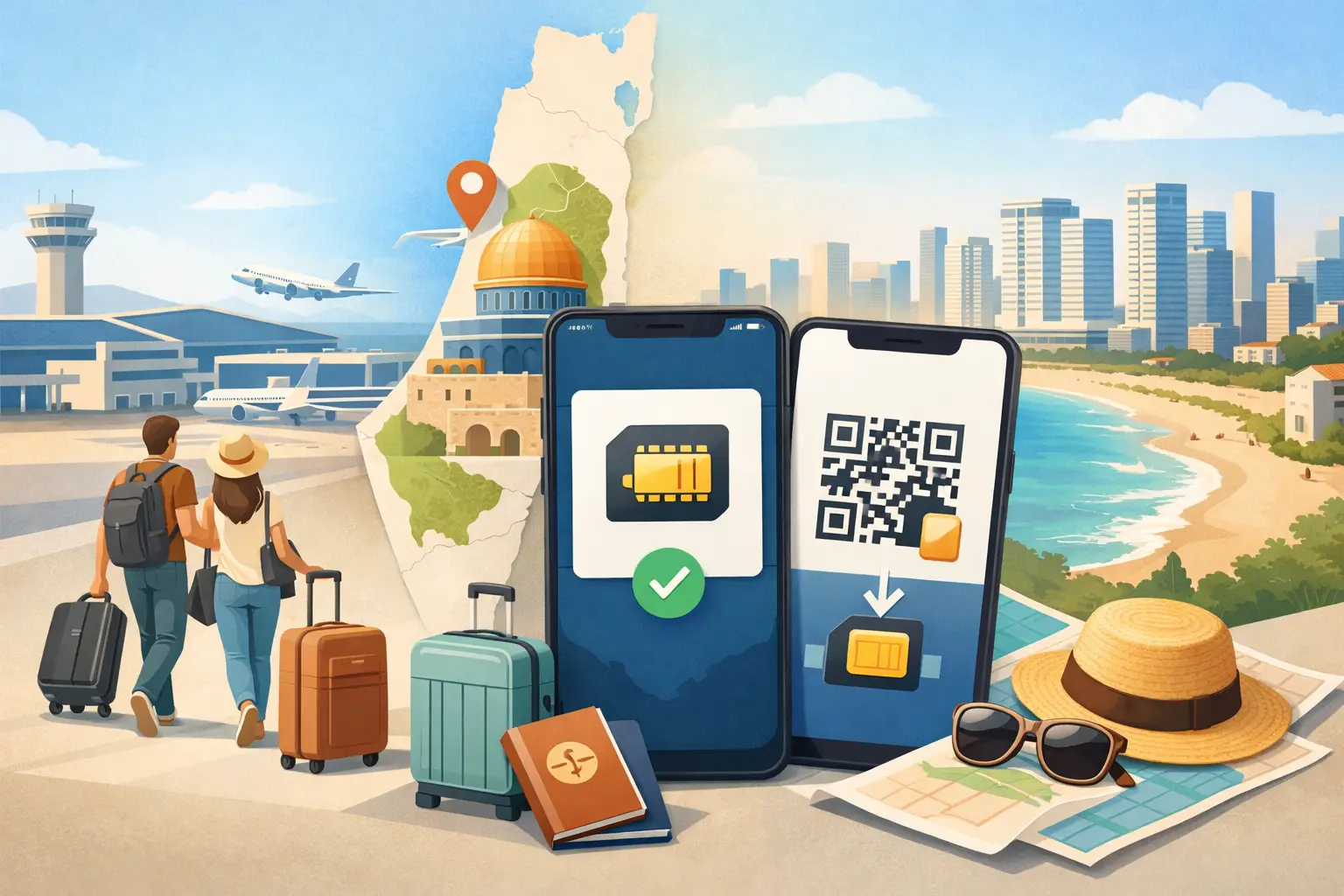
That matters because prepaid eSIM service is built for short-term travel. You buy the plan in advance, install it on a compatible phone, and activate it with a QR code. When you arrive, your phone connects to local service without needing a store visit or a plastic SIM swap.
For many travelers, this solves three problems at once. It keeps costs predictable, gets you online faster, and avoids the airport scramble of trying to compare mobile options after a long flight.
What to look for in an Israel travel eSIM
Not every travel option is equally practical. If your goal is to stay connected like a local, the plan should do more than just provide data.
Start with network access and data allowance. You want enough high-speed data for everyday travel use, especially if you rely on navigation, messaging, and media-heavy apps. If you are traveling for work, hotspot support can matter just as much as raw data volume.
A real Israeli +972 phone number can also make a difference. Some visitors only think about data, then realize they need a local number for reservations, local contacts, deliveries, or business communication. If your plan includes local calling and SMS, you have more flexibility once you are in the country.
Activation should also be straightforward. A digital setup with clear instructions and instant delivery is a major advantage, especially for travelers who want service ready before takeoff. The less you need to troubleshoot at the airport, the better.
When roaming might still make sense
It depends on your trip.
If you are spending one very short day in Israel, barely using your phone, and your carrier offers a low flat-rate daily pass, roaming may be acceptable. The same may be true if your employer pays for international service and cost is not your concern.
But for most leisure travelers, diaspora visitors, and business travelers staying several days or more, prepaid local-style service is usually the better value. Once you need regular maps, calls, messaging, and app use, roaming starts losing its convenience advantage.
Steps to avoid roaming charges before you travel
The best time to set this up is before departure, while you still have stable Wi-Fi and time to check your settings.
First, confirm that your phone supports eSIM and is unlocked for travel use. Most newer smartphones do, but it is worth checking rather than assuming.
Next, choose a prepaid Israel eSIM plan based on how you actually use your phone. A light traveler may only need enough data for maps, messaging, and occasional browsing. A business traveler or family trip planner may want more data, hotspot use, and a local number for easier coordination.
Then install the eSIM and follow the activation instructions carefully. In many cases, setup only takes a few minutes. If the plan is designed for Israel travel, you can land with service ready instead of trying to figure it out in the terminal.
Finally, turn off roaming on your primary home line. This step is easy to miss, and it matters. If your main carrier line keeps roaming enabled, your phone may still generate charges in the background.
Phone settings that help prevent surprise charges
Even with the right plan, your settings should support your travel setup.
Make sure cellular data is assigned to your travel eSIM, not your home line. Disable data roaming on your domestic carrier. If your phone allows separate settings for voice, messaging, and data, review each one before departure.
It also helps to turn off automatic app updates, cloud photo syncing on cellular, and other background services you do not need while traveling. These are not just cost issues. They can also consume your prepaid data faster than expected.
If you use dual SIM or dual line settings, double-check which line is active for what. Travelers often assume the phone will choose correctly on its own. Sometimes it does. Sometimes it does not.
Why a local number can be worth having
A lot of travelers focus only on data, but a real local number adds practical value in Israel.
If you need to call a hotel, coordinate with a driver, reach a local business, or receive a text confirmation, a +972 number can make things easier. This is especially useful for business travelers and diaspora visitors who may be coordinating multiple appointments, family visits, or services during a short stay.
It is not essential for every traveler. If you are only using messaging apps over data and never expect local calls or SMS, you may not need it. But if you want your phone to function more like a local line while you are in Israel, it is a feature worth choosing up front rather than wishing you had later.
A smarter arrival experience
One of the main advantages of arranging mobile service in advance is that you arrive ready to move. You can book a ride, message family, pull up directions, and confirm plans right away.
That matters whether you are landing at Ben Gurion Airport for a vacation in Tel Aviv, meetings in Jerusalem, or a trip that takes you across several cities in one week. The value is not just lower cost. It is time, confidence, and fewer moving parts when you are tired and trying to get where you need to go.
This is where a prepaid Israel eSIM fits the way modern travelers actually move. No hidden fees, no contract logic, no waiting around for a store. Just a clear plan, digital activation, and local-ready service.
Providers such as eSIM Israel are built around that exact use case - short-term visitors who want immediate connectivity, prepaid pricing, and practical local features before they arrive.
Avoid roaming charges in Israel without overcomplicating it
You do not need a complicated telecom strategy to stay connected. You need a phone that is ready, a prepaid plan that matches your trip, and the right settings turned on before departure.
If your priority is simple: land in Israel, connect fast, and keep costs under control, a prepaid travel eSIM is usually the cleanest option. It gives you more certainty than roaming and less friction than trying to solve everything after arrival.
The best travel setup is the one you do not have to think about once your plane lands.
eSIM Israel Team
Last updated