
In This Article
Landing at Ben Gurion with data is useful. Landing with a working Israeli phone number that can call a hotel, taxi, restaurant, or local contact is often better. So, can eSIM make calls? Yes, but only when the eSIM plan includes voice service. An eSIM is the digital version of a SIM card. It can support mobile data, calls, SMS, or any combination of the three, depending on the plan you purchase.
For travelers visiting Israel, that distinction matters. Many travel eSIMs are data-only, which means they are great for maps, messaging apps, and browsing but cannot place regular calls or receive SMS to a local number. A prepaid eSIM with a real Israeli +972 number gives you a more local way to stay connected from the moment you arrive.
Can eSIM Make Calls Like a Regular SIM?
Yes. An eSIM can make and receive calls in the same way as a physical SIM when it is connected to a mobile plan that includes voice minutes. Your phone does not treat an eSIM as a lesser service. Once activated, it can use the cellular network for calling, texting, and mobile data, subject to your plan allowances and network coverage.
The key is not the eSIM technology itself. The key is what is included with the plan.
A data-only eSIM does not come with a mobile number or traditional calling service. You can still make app-based calls through WhatsApp, FaceTime Audio, Zoom, Telegram, or similar apps as long as you have data or Wi-Fi. But you cannot call an Israeli landline, dial a local business directly, or receive a normal phone call through that eSIM.
A voice-enabled eSIM, on the other hand, can include a real Israeli number, local calling minutes, SMS, and data. That is the practical choice when you need to communicate beyond messaging apps.
Why a Local Israeli Number Can Be Useful
Travel plans do not always run through apps. A restaurant may call to confirm a reservation. A tour operator may need to reach you on the day of a pickup. Your host, local family, business contact, or delivery driver may prefer calling or texting an Israeli number.
A local +972 number also removes friction when you need to call Israeli businesses directly. Instead of relying on hotel staff, expensive international roaming, or a Wi-Fi connection that may disappear when you leave the building, you can make a standard local call from your phone.
For short-term visitors, the benefit is simplicity. You buy a prepaid plan, know what is included before you travel, and avoid an ongoing contract. There is no need to search for mobile service after a long flight or worry about your home carrier's roaming rates building up in the background.
What You Need to Make Calls With an eSIM
Making calls with an eSIM is straightforward, provided that four things are in place:
- An unlocked, eSIM-compatible phone
- A prepaid eSIM plan that explicitly includes voice calling
- A local phone number assigned to the plan
- Activation and cellular settings completed on your device
Your phone must be carrier-unlocked to use a travel eSIM from another provider. Most newer iPhone, Google Pixel, Samsung Galaxy, and other leading smartphones support eSIM, but compatibility depends on the exact model and region where it was purchased. It is worth checking before you buy.
Next, read the plan details carefully. Look for clear language such as "Israeli number," "local calls," "voice minutes," or "SMS included." If a plan only advertises gigabytes of data, assume it is data-only unless it specifically says otherwise.
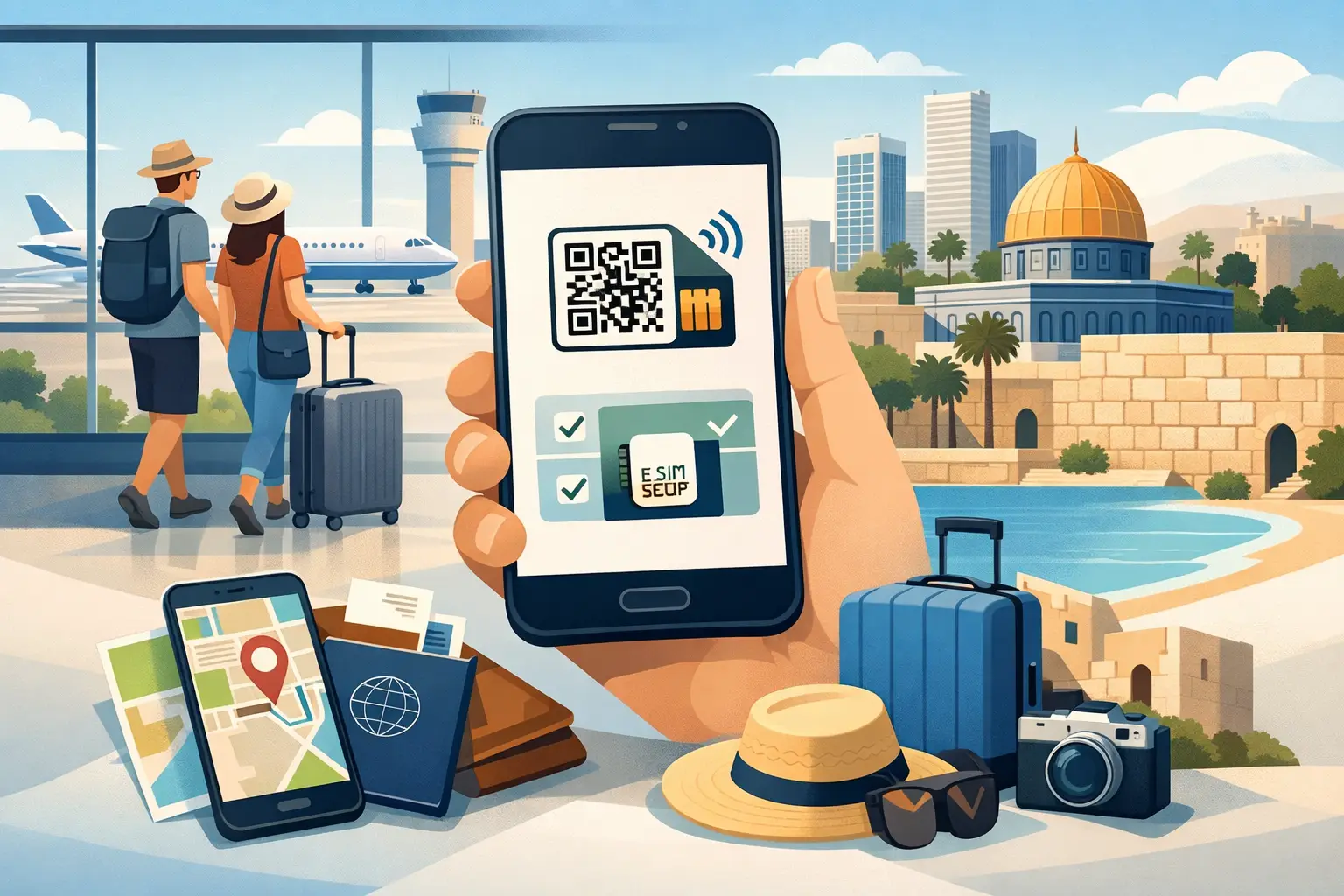
Once you receive your QR code, installation typically takes only a few minutes. You add the eSIM through your phone's cellular settings, label it so you can identify it easily, and select it for mobile data, calls, or both. eSIM Israel offers tourist-focused prepaid options designed for visitors who want data alongside practical local calling and SMS features.
How Calls Work After Activation
After your eSIM is active and connected to a supported Israeli mobile network, you use your phone's normal dialer. To call an Israeli number, dial it in the format shown by the business or contact. For international numbers, use the country code and confirm that your selected plan supports international calling if that is something you need.
Incoming calls work through the Israeli number assigned to your plan. If someone in Israel calls that number, your phone rings as it normally would. The same applies to SMS messages included with the plan.
If your phone supports Dual SIM functionality, you can usually keep your home line active while using the Israeli eSIM for local service. This is useful if you need to receive a bank verification message or a call to your usual number. However, leaving your home line active for roaming can create charges depending on your carrier. Check your home carrier settings before departure, and consider disabling data roaming on that line.
Calls, Wi-Fi Calling, and Messaging Apps Are Different
These services can look similar on your screen, but they work differently.
A standard cellular call uses the voice service included in your eSIM plan. It works through the local mobile network and does not require you to open an app or find Wi-Fi. This is the best option for calling local Israeli numbers when you are out exploring Tel Aviv, heading to a meeting in Jerusalem, or arranging transport from the airport.
A messaging-app call uses mobile data or Wi-Fi. It can be an excellent backup and may be enough for travelers who only communicate with friends and family using the same app. However, it cannot replace a local number when you need to call a business, reach a landline, or receive a traditional SMS.
Wi-Fi Calling is a separate feature offered by some home carriers. It may let you make calls through Wi-Fi using your usual number, but availability and charges depend on your carrier. Do not assume Wi-Fi Calling replaces a local Israeli calling plan, especially for local calls and texts during your trip.
Common Issues That Stop an eSIM From Making Calls
If your eSIM has data but cannot make calls, the most common reason is simple: the plan is data-only. Check the plan confirmation for included voice minutes and a phone number.
If your plan includes calls, confirm that the eSIM is enabled for voice in your phone settings. On Dual SIM phones, it is easy to accidentally leave your home line selected as the default voice line. Set your Israeli eSIM as the calling line when you want to place local calls.
You should also make sure cellular service is available and that Airplane Mode is off. In some locations, such as underground areas, elevators, remote terrain, or heavily restricted zones, mobile reception can be limited. Moving to an open area or waiting until you return to stronger coverage may resolve the issue.
Finally, check your remaining plan balance or allowance. Prepaid plans include a defined amount of data, minutes, and SMS. Once an allowance is used, you may need to add more service, depending on the plan terms.
Is a Calling eSIM Worth It for Israel?
It depends on how you travel. If you only need maps, social media, and WhatsApp, a data-only eSIM may be enough. It is a simple option for travelers who do not expect to call local numbers or receive SMS.
A calling eSIM is usually worth choosing if you are visiting family, coordinating business meetings, using local services, booking tours, staying in several locations, or simply want a reliable local contact number. The extra convenience is most valuable when plans change and you need to reach someone quickly without depending on Wi-Fi.
Before you fly, choose a prepaid eSIM that matches the way you actually travel: enough data for navigation and sharing, plus local calls and SMS if you need a real Israeli number. Then activate it, save your important contacts with country codes, and arrive ready to make the call when it matters.
eSIM Israel Team
Last updated