
In This Article
Landing at Ben Gurion with no data is an expensive way to start a trip. Maps, rides, hotel messages, family updates, and work calls all need a connection right away. The best eSIM plans Israel visitors choose are prepaid plans that are ready before departure, provide enough data for the trip, and include local features that make everyday travel easier.
For many visitors, data alone is not the whole answer. A real Israeli +972 number, local calling, SMS, and hotspot support can be just as useful when coordinating with a hotel, guide, business contact, or family member. The right plan depends on how long you are staying, how heavily you use mobile data, and whether local communication matters to your itinerary.
What Makes the Best eSIM Plans Israel Visitors Need?
A good tourist eSIM should solve the practical problems that appear the moment you arrive. It should be prepaid, clear about what is included, and simple to install on a compatible phone before the flight. You should not need to search for a store, handle a physical card, or worry about an open-ended mobile commitment.
Start with network access. Your phone needs dependable mobile service for the places you actually plan to visit, whether that is Tel Aviv for meetings, Jerusalem for sightseeing, Haifa for family visits, or Eilat for a short break. Plans that use established Israeli mobile networks are generally the sensible choice for travelers who want local-style connectivity. Availability and speeds can vary by device, network conditions, and location, so treat 5G as a useful capability where available rather than a promise everywhere.
Next, look beyond the headline data allowance. A plan with a real Israeli number can be more practical than a data-only option. Some local services, restaurants, drivers, and contacts may prefer calling or texting an Israeli number. If you are arranging business meetings, visiting relatives, or managing several bookings, having local calls and SMS included can remove unnecessary friction.
Finally, choose a plan that states its cost and validity clearly. Prepaid means you know what you are paying before you travel. There are no surprise roaming charges from using your home carrier abroad and no contract to manage after your trip.
Choose Your Plan by How You Travel
The best plan is not always the plan with the biggest number attached to it. Buy for your real usage, not a theoretical maximum.
Short city breaks and light users
For a three- to five-day visit focused on a few cities, a modest data allowance may be enough. Navigation, messaging, restaurant searches, ride apps, and occasional social media usually do not require unlimited use. If you can connect to Wi-Fi at your hotel or workplace, you may use less mobile data than expected.
Still, do not choose too little data just to save a small amount. Mapping apps, photo uploads, video calls, and background app updates can consume data quickly. A slightly larger prepaid allowance is often the safer choice when you expect long days away from Wi-Fi.
One- to two-week vacations
Travelers spending a week or two in Israel usually benefit from a larger data plan with a local number, calls, and SMS. This is the most balanced option for visitors moving between destinations, coordinating day tours, staying in touch with local contacts, and using their phone throughout the day.
Hotspot support is especially valuable here. It can give a laptop or tablet internet access during a work call, while traveling between hotels, or when the accommodation Wi-Fi is slow. Just remember that tethering can use a large share of your allowance quickly, particularly for video meetings or cloud backups.
Business trips and working visits
Business travelers should prioritize dependable data volume, hotspot availability, and a real +972 number. Your phone may be your navigation tool, meeting line, backup internet connection, and local point of contact all at once.
Check your phone settings before departure. Turn off automatic app downloads, automatic photo backups, and unnecessary background refreshes if you need to preserve data. For travelers with video calls or large file transfers, a higher-data plan is usually better value than trying to stretch a small package.
Diaspora visits and family travel
Visitors staying with family often need more than data. Calls and SMS can be useful for communicating with relatives, coordinating pickups, and receiving local messages. A local number also makes it simpler to share one reliable contact number for the duration of your stay.
For families, hotspot support can reduce the need to arrange separate connectivity for every device. It is a practical backup for a child’s tablet or a second device, though one phone serving several users will burn through data faster.
Data-Only vs. a Real Israeli Number
Data-only eSIMs can work well for travelers who rely entirely on WhatsApp, FaceTime, email, and web-based booking tools. They are straightforward if you only need internet access and do not expect local calls or SMS.
But data-only has a trade-off: you do not have a local phone number. If your plans involve Israeli businesses, local delivery coordination, hotels, professional contacts, or family members who prefer regular calls and texts, a plan with a real +972 number is often the more useful option.
For that reason, the best eSIM plans in Israel commonly combine high-speed data with local calling, SMS allowances, and an Israeli number. You get the convenience of an eSIM without giving up the practical features of local prepaid mobile service.
Install Before You Fly, Activate When You Need It
An eSIM removes the airport-store problem, but it still pays to set it up carefully. Confirm that your smartphone is carrier-unlocked and eSIM-compatible before purchase. Most recent flagship phones support eSIM, but compatibility varies by model, region, and carrier restrictions.
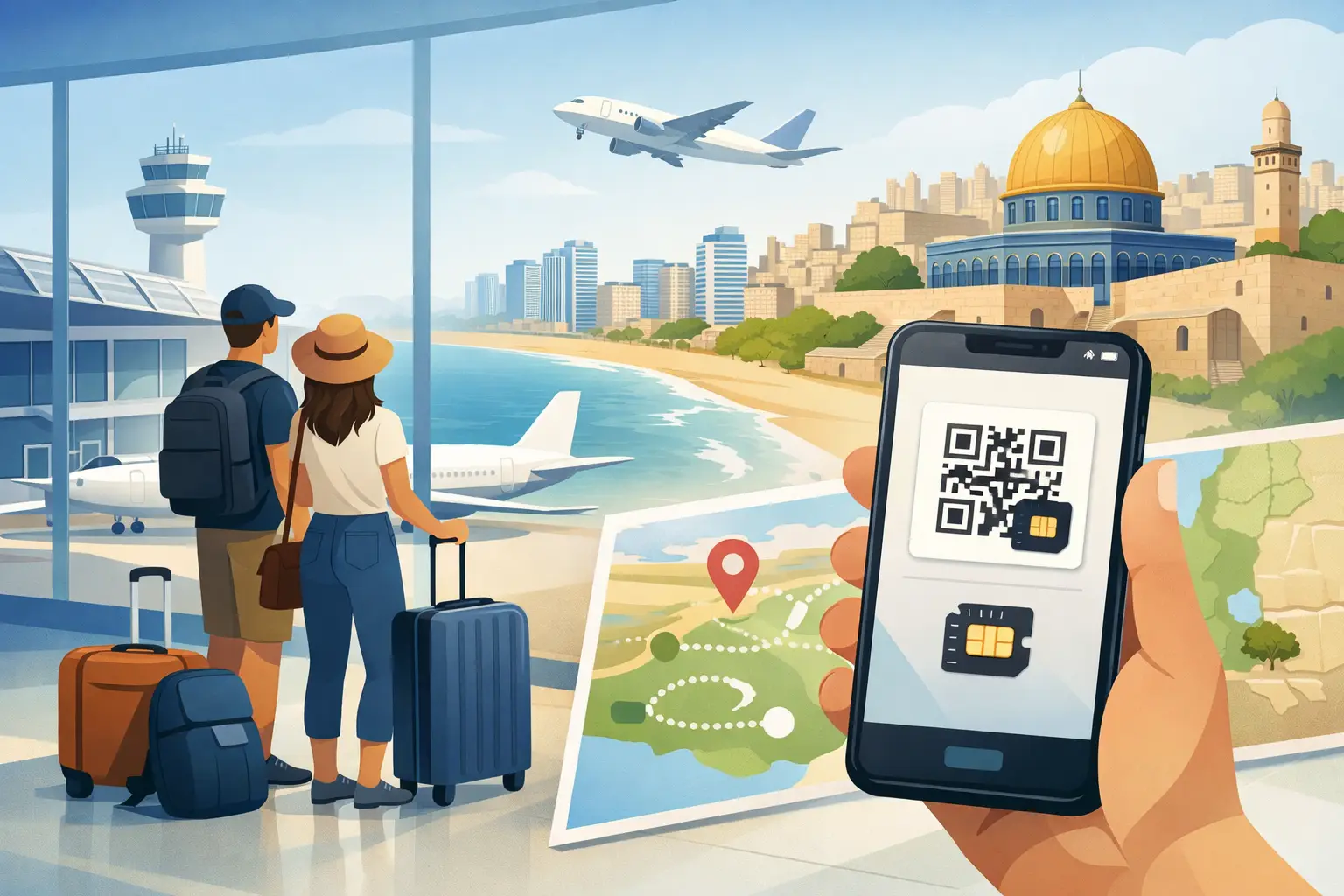
After purchase, you typically receive a QR code for installation. Connect to Wi-Fi, scan the code, label the new cellular plan clearly, and keep your primary line available for any services you still need from home. Do not delete the eSIM profile after installing it unless you have been instructed to do so.
Before leaving, review your cellular settings. Set the Israel eSIM as the line used for mobile data after arrival, and turn off data roaming on your home line if you want to avoid accidental roaming charges. If your plan includes a local number, make sure the line is enabled for calls and SMS as well.
This preparation takes only a few minutes and can save a great deal of hassle after landing. Instead of looking for connectivity at the airport, you can message your driver, check directions, or let family know you arrived.
What to Check Before Buying
Plan descriptions can look similar at first glance. Compare the details that affect your actual trip:
- Data allowance and validity period, matched to your stay and expected usage.
- Whether the plan includes a real Israeli +972 number, local calls, and SMS.
- Hotspot support if you expect to connect a laptop, tablet, or another phone.
- Network and coverage information for the regions on your itinerary.
- Activation instructions, device compatibility requirements, and prepaid pricing.
Do not assume every eSIM includes every feature. Some plans are designed only for data, while others are built for travelers who need a more complete local mobile experience. eSIM Israel focuses on prepaid tourist plans that can include data, a real +972 number, local calls, SMS, and hotspot use, depending on the plan selected.
Use Data Wisely Once You Arrive
A larger plan gives you more freedom, but smart settings still help. Download offline maps for the areas you expect to visit, use hotel Wi-Fi for operating-system updates, and avoid uploading full-resolution photos over cellular data unless you have plenty to spare.
If you are traveling beyond major urban areas, download directions before heading out and keep important confirmations saved on your phone. Mobile service can vary with terrain, building structure, network conditions, and local restrictions. Planning ahead is useful even with a strong prepaid plan.
A Better Arrival Starts Before Departure
The right eSIM is a small travel decision with an immediate payoff. Choose enough data for how you actually use your phone, add local calls and a +972 number when your trip calls for them, and install your plan before boarding. Then when Israel comes into view from the plane, your phone is ready to work as soon as you are.
eSIM Israel Team
Last updated