
In This Article
Landing at Ben Gurion with no data is expensive in ways that do not show up on a phone bill. A missed driver message, a map that will not load, or a roaming day pass can cost far more than a prepaid plan. Understanding eSIM pricing before you travel helps you choose the service you will actually use, without paying for features that do not fit your trip.
For most visitors, the right question is not, “What is the cheapest eSIM?” It is, “What will keep me connected from arrival through departure at a clear prepaid price?” Data allowance, trip length, local calling, a real Israeli number, and network access all affect the answer.
What eSIM Pricing in Israel Usually Includes
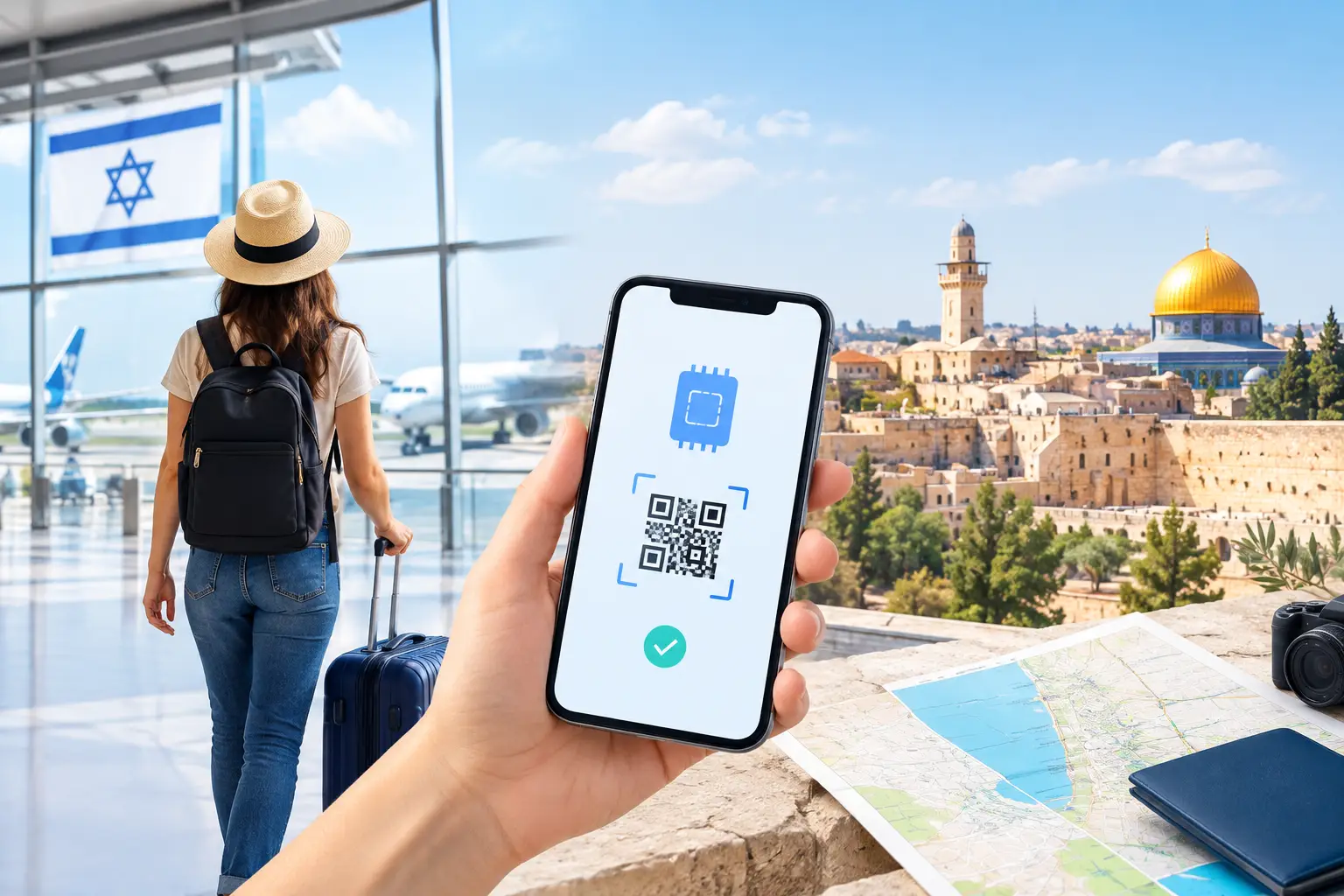
A tourist eSIM is a prepaid mobile plan delivered digitally. You purchase it before your trip, receive activation instructions and a QR code, then install it on a compatible phone. There is no store visit, no contract, and no need to search for mobile service after landing.
The price generally reflects four things: how much high-speed data is included, how long the plan remains active, whether it includes local calls and SMS, and whether it provides an Israeli +972 phone number. Plans with more of these practical local features may cost more than data-only options, but they can also remove common travel problems.
A real local number can be useful when communicating with hotels, tour operators, restaurants, drivers, relatives, and local businesses. It may also help when a service asks for an Israeli contact number. However, individual apps and institutions set their own verification rules, so no mobile plan can guarantee acceptance for every account or verification request.
Your price should be clear before checkout. Look for the data amount, validity period, included call and SMS allowances, and any stated top-up or renewal options. Prepaid pricing should feel straightforward: you know what you are buying and when the plan ends.
Why the Lowest Price Is Not Always the Best Value
A very low-priced plan may work well for a short city break if you only need messaging and occasional maps. It may be less suitable for a family trip, a business visit, or a week of moving between Tel Aviv, Jerusalem, Haifa, the Dead Sea, and Eilat.
The difference often comes down to data use. Navigation, ride-hailing, restaurant searches, shared photos, video calls, cloud backups, and social media can use far more data than travelers expect. If you run out early, adding data later may be less convenient than choosing the right allowance from the start.
Data-only plans are another trade-off. They are often attractive because the headline price is low. But if you need to call a local business, receive calls from family in Israel, or use SMS during your stay, a plan with a real Israeli number and local calling can be worth the additional cost.
Network quality also matters. A plan tied to established Israeli mobile infrastructure may cost more than a basic travel-data product, but reliable access is part of the value. Speeds and reception vary by location, device, network conditions, and building type. You should expect strong service in many populated areas, not guaranteed signal in every remote, underground, or restricted location.
Choose a Plan Based on Your Trip, Not Just Gigabytes
Start with the number of days you will be in Israel. Plan validity is as important as data volume. A seven-day plan may be a smart purchase for a six-day trip, while a longer visit needs enough time built in for arrival and departure days. Do not assume unused data will remain available after the validity period ends.
Next, estimate how you use your phone when traveling. A light user who relies mostly on Wi-Fi may need data for maps, WhatsApp, email, and ride bookings. A moderate user may stream music, upload photos, browse throughout the day, and make occasional video calls. Heavy users, remote workers, and travelers sharing a hotspot with a laptop or another device need substantially more room.
Hotspot support is especially valuable when you need to work from a hotel lobby, answer emails between meetings, or give a travel companion temporary access. Check that your selected plan permits hotspot use rather than assuming every eSIM does.
Then consider whether local voice and SMS are useful for your itinerary. Visitors staying with family, coordinating business appointments, arranging private transport, or making restaurant reservations often benefit from a +972 number. If your trip is entirely app-based and you only communicate through internet messaging, data may be your main priority.
A Simple Way to Compare eSIM Plan Prices
When comparing plans, use the same checklist for each one. First, check the total prepaid price, not just a promotional headline. Second, compare the validity period. Third, look at the amount of high-speed data and what happens if it is used.
After that, check the local features. Does the plan include an Israeli number? Are local calls and SMS included? Is hotspot use allowed? Finally, confirm that the plan is intended for use in Israel and that your device supports eSIM technology and is unlocked for use with another mobile provider.
A plan that costs a little more but includes the full length of your stay, enough data for maps and messaging, hotspot access, and local calling can be better value than a cheaper plan that leaves you buying an add-on halfway through your trip. The goal is not to maximize features. It is to avoid paying twice for connectivity.
Watch for Costs That Are Easy to Miss
Roaming charges are the most common surprise. Some home carriers offer international passes that charge by the day, even if you only use a small amount of data. Over a longer visit, several daily charges can quickly exceed the cost of a dedicated prepaid Israel eSIM.
Another issue is timing. Installing your eSIM before departure is usually the easiest approach, but follow the activation instructions carefully. Some plans begin their validity period upon installation or first connection to a local network. If you activate too early, you could lose useful travel days. If you wait until you need a signal at the airport, you may be trying to read setup instructions without reliable internet.
Also check your phone settings. Keep your home line available for essential calls if needed, but turn off data roaming on that line to avoid accidental usage. Set the Israel eSIM as your mobile data line once you arrive, and make sure data switching is configured according to your phone’s settings.
What You Are Paying For Beyond Data
The best prepaid eSIM experience is about reducing friction. You are paying for the ability to arrive ready to navigate, message, call locally, receive travel updates, and use the services that make a trip run smoothly.
With eSIM Israel, travelers can choose prepaid plans designed for visitors who want local-style connectivity without a physical SIM card or long-term commitment. Depending on the plan, that can mean high-speed 4G/5G data, a real Israeli number, local calls, SMS, and hotspot support through Israeli mobile networks.
That combination matters most when your plans change. A delayed flight, a late hotel check-in, a meeting moved across town, or a family member needing to reach you should not require hunting for Wi-Fi. A clear prepaid price is easier to budget for than a sequence of small travel inconveniences and unexpected roaming charges.
Buy for the First Full Day, Not the Flight
Choose enough data and validity to cover your first full day in Israel with confidence. That is when you will most likely use maps, send arrival messages, coordinate transport, check reservations, and search for practical information. If your trip demands more, select a plan that matches it before you leave. A few minutes spent comparing what is included can make your arrival feel exactly as it should: connected, prepared, and uncomplicated.
eSIM Israel Team
Last updated